
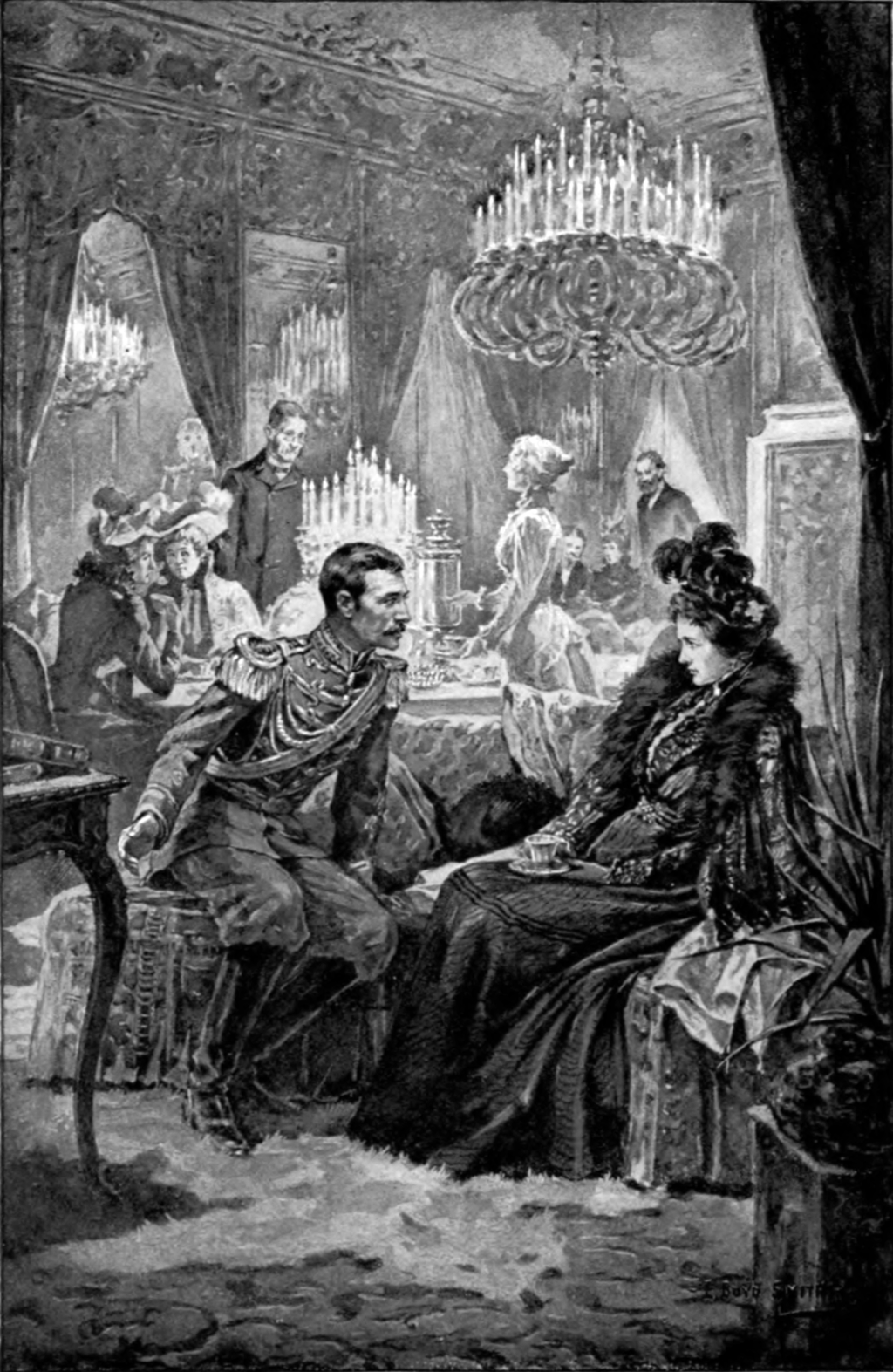
*spoiler alert*
While reading, please bear in mind the visibly patriarchal, conservative, and religious nature of Tolstoy’s Anna Karenina, set and published in 19th century Russia — a world of elitist Francophiles and post-serfdom tension.
I have returned to Tolstoy’s novel Anna Karenina about once a year for the past three years, because every time I read it I find another thought, worry, or feeling I have had — or has been confessed to me by someone else — articulated in it through its various hyper-realistic characters. Tolstoy, after all, wrote for everyone; Anna Karenina was published in serial form in a Russian magazine during the latter half of the 19th century. The language flows clearly and simply, tonally almost similar to modern, everyday speech and thought. The novel’s characters are profoundly human, their inner lives sketched out in sometimes agonizing length, to the point where every reader is guaranteed to see one character or another mirror their own minds, in a way that might make them sigh at their own silliness or feel a small sense of inner relief — oh, this is a NORMAL problem. The plot moves forward at its own pace, but as you connect a character to yourself, to your mother, to a friend, to someone random in your life who really pisses you off — you get stuck in the story (especially when it comes to the pissing off people, who usually get their just deserts at least in the space of literature).
I find getting stuck in the minds of these characters as an alleviation for overthinking (or self doubt, indecision, crippling anxiety, etc.), particularly the characters of Kitty Shtcherbatskaya and Konstantin Levin, whose inner conflicts are resolved as their storylines bring them to understand very simple truths.
Kitty Shtcherbatskaya is one of the most fascinating characters to me. She, as well as the other women of the novel, remind me of characters drawn out or reimagined by Sofia Coppola — think Marie Antoinette, Priscilla, and Scarlett Johansson’s character in Lost in Translation — melancholy girls trapped in gilded cages by rich, powerful men, or society, etc. In Anna Karenina, they are often trapped by the notion that their value and social power lies in their youth, beauty, and their marketability for men.
Kitty begins the novel led entirely by that notion; she is an eighteen year old and beautiful debutante, and she sees herself as a product for sale in the marriage market. And she’s proud of it! She is the *sparkliest* thing of them all, who has caught the eye (and in her mind, the heart) of the most eligible purchaser of them all, the rich and handsome Vronsky. She enjoys playing the part of Vronsky’s heroine, and makes her feelings all too clear to him, gazing at him with unfettered love in her eyes during a ball, while his eyes are already wandering towards the novel’s magnetic goddess, the titular Anna Karenina. In his mind, his interactions with Kitty have always been a meaningless flirtation, and his behaviour of course has been wholly blameless.
This moment at the ball haunts Kitty through the rest of the story, fuelling feelings of shame and self-loathing. Context has to be paid close attention to in this story — Kitty’s ensuing dramatic downward spiral would not have been such an obvious overreaction at the time — and the essence of her story remains relatable and thought-provoking.
Kitty’s ego has been hurt in the acutest way. It is not the romantic rejection alone — if that had been the case, Kitty could have blamed Vronsky entirely for hurting her, but she knows she has not behaved in a way she can respect, but with hypocrisy — and so she has to transfer the blame to herself, which causes something to fester within her.
Kitty’s problem is simple cognitive dissonance — she cannot reconcile her past actions, and how she has been treated, with the kind of person she believed herself to be. She had GIVEN Vronsky the ability to utterly humiliate her by debasing herself and commodifying herself — all he had to do was agree to buy her. She had reduced herself to looks and flirtation and superficiality, and had been playing the part of a romantic heroine on stage, without trying to make an actual human connection. And she had been hurt and embarrassed for it. It is a slap in the face for a teenaged girl, and a shattering of her illusions and the ideas she had of herself.
“How could I have *behaved* like that? That wasn’t me, I’m better than that, am I not too smart to have landed in a situation like that? I HATE who I was” — Kitty’s circumstances are definitely very removed from those of pretty much everyone today, but her (paraphrased) thoughts are not — and definitely not for those plagued by anxiety or overthinking, particularly during adolescence.
Being forced to confront your own hypocrisy is tricky; questioning yourself and become more completely aware of less-than-flattering motives behind your actions and behaviours can cause the ground beneath your feet to fall away a bit. Am I not as good as I thought I was? Who am I then? And the ensuing shame, that feeling of cringe, is sticky.
How do you overcome this? How do you get back to feeling okay with yourself?
So Kitty embarks on this inward battle: an attempt to dissolve her coating of shame, and to placate her ego. She yearns to achieve some form of apotheosis, and so she latches on to Varenka (or really, her idea of Varenka — Varenka the angel).
Varenka is a character who seems to operate on another level from the other women of Tolstoy. She is the adopted daughter and de facto nurse of a (pseudo-)religious woman, and she seems to spend all her time in service of someone else. She is very specifically described as a young but nevertheless faded beauty by Tolstoy. Her features are good, but she lacks that “consciousness of her own attractiveness” that is present in such abundance in Kitty, and is part of the secret to Kitty’s vibrancy. It is that aspect of Kitty’s beauty that is particularly alluring to men — the vital, alive, fiery aspect. Varenka’s beauty instead is desexualized — Tolstoy calls her “a flower without fragrance”. There is a reason the only man she seems to appeal to is Sergei Ivanovich, the academic, rather than a character more attuned to his senses and animal instincts like the philandering Oblonsky.
Varenka could never be a good to be sold. She serves the world in loftier ways, she looks after people, she plays the piano beautifully without enjoying her audience’s praise. She is a person who could never feel shame, who could never be demeaned, and who would always possess dignity.
Of course, this is not quite exactly who she is — she is more human than this, but these are the parts of the novel narrated to us through the eyes of Kitty, and to Kitty, she is everything that she wishes she had been around Vronsky. Kitty dreams of becoming like Varenka, of becoming better in the full sense of the word, and of once again feeling like her actions are in agreement with who she believed she was and who she wants to be. So Kitty puts on her Varenka costume and plays the part of the nurse, helping Varenka care for a poor invalid artist and his family. And once again, things go wrong, as the artist ends up falling for Kitty and fighting with his wife over her instead of playing his own role of Kitty’s patient correctly.
Finally, Kitty gets her dose of reality. Exchanging one form of hypocrisy for another does not fix anything. A weary, amused Varenka says to her : “why should you be like anyone? You’re nice as you are”, and waves her old problems aside as ephemeral parts of life. It may seem like a trite lesson, but Kitty’s indoctrination of the idea that all she can do is be herself, her natural self, best she can, is what gives her one of the happiest endings any character has in the novel.
There is something incredibly peaceful about Tolstoy’s message here, as though he is patting his readers on the head and telling them to chill out (though without causing the irritation that that advice usually evokes). Stop faking it. Nothing good comes of doing that. And it’s key to a life with less cognitive dissonance and anxiety.
Kitty’s eventual husband Levin is another character whose inner life consists of a battle with himself, though his is largely to do with religion and the meaning of life. I won’t go into discussing that here, but I like how he points out the holes in rhetoric and reasoning when it comes to forming opinions and making decisions. These concepts are not good enough by themselves; we can convince ourselves of anything with enough good argument. The philosophies and theories that Levin discovers end up ballooning into a bubble of persuasive language easily popped by another school of thought. Finally, Levin discovers that what’s important in the end is feeling, not thought — living with goodness in mind, and others in mind. It adds meaning to his life in a way that’s untroubled by any philosophy, science, or religion.
He, much like Kitty, will not rise into something better than human thanks to this knowledge. They both continue to to be flawed, to make mistakes, but they live without constant self doubt, questioning, and hypocrisy. Peacefully.
 ketaki nair
Leave a comment