
Philosophizing on artificial intelligence and VR
One of my favourite places in the world to be in is the balcony of my grandparents’ pretty, sun-soaked apartment in Cochin, Kerala.
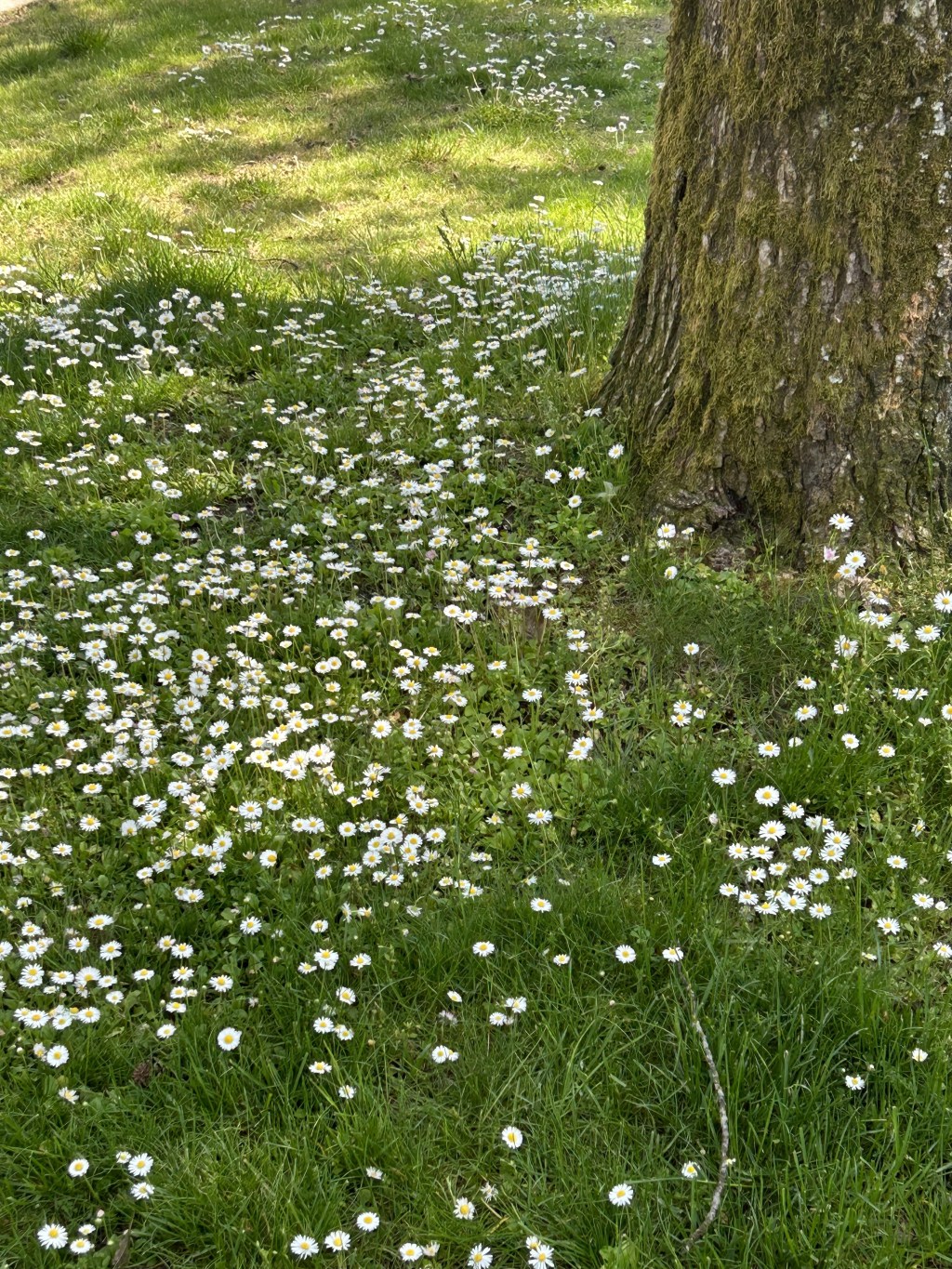
I have a very well thought out set-up there. I wait for mid-afternoon, when all my various family members have retired to sleep their lunches off, and the sun is not too overbearingly hot (I like to cook lightly, not broil). I grab a cup of coffee and a book from one of the little libraries that my grandparents keep like hidden treasure chests in each room, and sit in the balcony chair that faces the best view — a giant expanse of green, trees and vines blending together beneath the building, dotted with small ponds with green scum coating them. Untouched nature — well, mostly. Progress has reared its ugly head here too in the form of a construction site close to the building, but the balcony chair that I habitually choose escapes the sight of it. It’s as untouched a place as you can get within city limits.
I recently visited my grandparents and was enjoying an afternoon of this peace. Birds twittered languorously as I sipped my coffee, watching the crust of malai (cream) form at the top. My grandmother buys whole milk so that she can make her own ghee with it. I quickly got lost in my book, a particularly lighthearted PG Wodehouse.
Unfortunately today, various family members rose earlier than was their custom, and came to sit next to me.
“Do you think you’re going to get a job soon?” Asked my grandmother, a note of anxiety in her voice. I think she couldn’t help it after seeing me look so relaxed whilst unemployed.
“This is interesting,” said my mother, saving me a reply. She had been looking at her phone. “They’re making virtual windows for apartment buildings in these super packed areas. You get to see pretty landscapes instead of the ugly buildings you’re actually surrounded by. Smart!”
“Ew!” I said instinctively, feeling a flash of something similar to that uncanny valley feeling.
Distortions & superfluity
Electronic windows displaying an artificial utopia — which is really just the world, had we left it alone — instead of showing us what we are actually surrounded by: the genuine effects of consumerism, overpopulation, and untempered development … We have exchanged the natural world for ease and comfort, and is this the last step? To distort reality and blind ourselves, so we can ignore any of the negative consequences of our actions. Stick our heads in the sand and pretend. Isn’t there something just plain icky about it?
General sentiments about our rapidly growing technology seem ambivalent these days. A year ago, when ChatGPT heralded the era of AI-mania, I was still an undergraduate, and most of my friends were firmly in the camp of AI-optimists, people enjoying the chatbot’s capabilities to help with homework, and the dazzling idea of a future with no donkeywork. While these pros still exist, a lot of pessimism seems to have slowly creeped in over the past year, as people seem to feel the effects of AI edging them into obsolescence — for instance, the SAG writer and actor strikes, with demands like ‘don’t use my voice without permission’, and ‘don’t replace my writing with that of a robot’s’. Similarly worrying is the idea of intellectual atrophy. Technology used to prompt us to outsmart it, to become better than it. There’s a reason we look down our noses at Luddites — no one wants to be a part of the group of people who threw out machinery in order to keep others dependent on their labour, the fruits of which were indistinguishable if not worse than those of the machines.
But is this technology still at all similar to labour-saving mill equipment, which prompted improved production and nudged more people into more intellectual work? All machinery causes some temporary human replacement, but is this the same? Or is this technology actually causing a lessening, a dampening of human capability? Young kids are assigning their homework to AI. Chatbots emulate writers, artists, etc. after having been trained (without consent) on their work. There is a sense of pointlessness to some kinds of work now, and a general sense of intellectual laziness pervades and stagnates as the reason to actually think shrinks and shrinks, as new and more capable chatbots and forms of AI stand ever-ready like legions of Red Army soldiers — no need to think! I’ll parrot a reasonable enough thought right here, it’s all cooked and ready!
*********
My grandparents are not particularly fond of new kinds of technology. My grandfather has grumbled more than once at my AirPods, insisting they will make me grow deaf. Most new tech has had to make a strong case for its usefulness before being allowed to cross their doorstep.
Strong WiFi was brought in for my younger brother’s sake; he was an avid gamer, and strong WiFi was a requirement.
My grandmother used to boil their water instead of bothering with a filter. We all painstakingly watched her do this for a couple of hours a day during a family visit, before she was finally persuaded to purchase a water filter.
My grandfather was very worried one night when I kept a power strip and extension cord on my bed to charge my phone; the next day he brought me a little plastic box fitted with a very safe extension device that he had fashioned himself, so that nothing electronic lay on the bed with me.
All the technology in that home is meshed with love and care.
Meanwhile, my grandfather still enjoys ending his evenings in the balcony sitting next to his radio, fitted to the wall beside him, listening to Malayalam songs and news.
Simulations
The idea of fake windows bothered me for a while, a feeling that was amplified when my friend excitedly showed me a video about Apple’s new VR headset; someone had filmed their apartment virtually (in the most literal sense of the word) transformed by the headset, and was working on a computer that only he could see. But of course, it was a real computer, the VR headset was allowing for his eye movements and hand gestures in thin air to cause real things to happen.
But what does real mean anymore? We, as a collective culture, love creating fake worlds for ourselves to live in. Novels, fantasy films, Disneyland, and now VR. But now the boundary between what is real and what is fake seems to be blurring as our technology grows and expands exponentially, and we can bring the fake or the fantasy or the virtual into our everyday lives in a much more visceral and real way than simply getting lost in a great book.
Are AI-generated images as real as the works of a human painter? Both creations exist, they are real in that simple sense. But one took an algorithm and one took a mind, and all the layers of human experience and thought and memory that exist in that mind. This concept seems to assign more weight to the creations of humans. How much does that affect how we perceive the output though, and the aura of being genuine or artistically important? And to most consumers of media, does that matter all that much? There is a reason why actors and writers are striking, and why artists are suing. As technology blurs the space between real and fake, the intellectual space of humans is being encroached upon.
I recently read about a fashion designer named Norma Kamali, who is training an AI model to learn her design style, so that her style never dies even after she passes on. It’s a limited achievement of immortality, AI-Kamali will live forever. It doesn’t quite replace her; had she lived on, her experiences would have undoubtedly changed her style and designs over time in ways that could not have been predicted by an algorithm. Now instead an uncreative version of her will go on hollowly repeating the same ideas in different ways. Designs with no growth, no decay, no heart, and no soul. It’s an interesting idea, I certainly understand the gimmicky appeal of it too, but would people really want to dress in fashion designed by a robot, even if it was a robot trained by a human designer? That icky feeling of something being fake, of a pretence, of something masking as human — the sense of something uncanny valley-like — creeps in again.
Yet, at the same time, I don’t think technology will ever cause people to fade into irrelevance. No matter the distortions of reality, no matter if the world becomes filled with media not made by people, but by a computer (made by a computer made by a computer…made by a computer) made by people. My rather pessimistic thoughts are all laid out in this essay, but at heart I’m certain that above all, people want people. The SAG writers and actors won their strikes, the production companies have to manage their use of AI accordingly. As the AI boom continues to grow and change shape, I don’t think we will allow for technology that doesn’t really care about people. We can rest easy about that.
 ketaki nair
Leave a reply to Uttara Joshi Cancel reply